
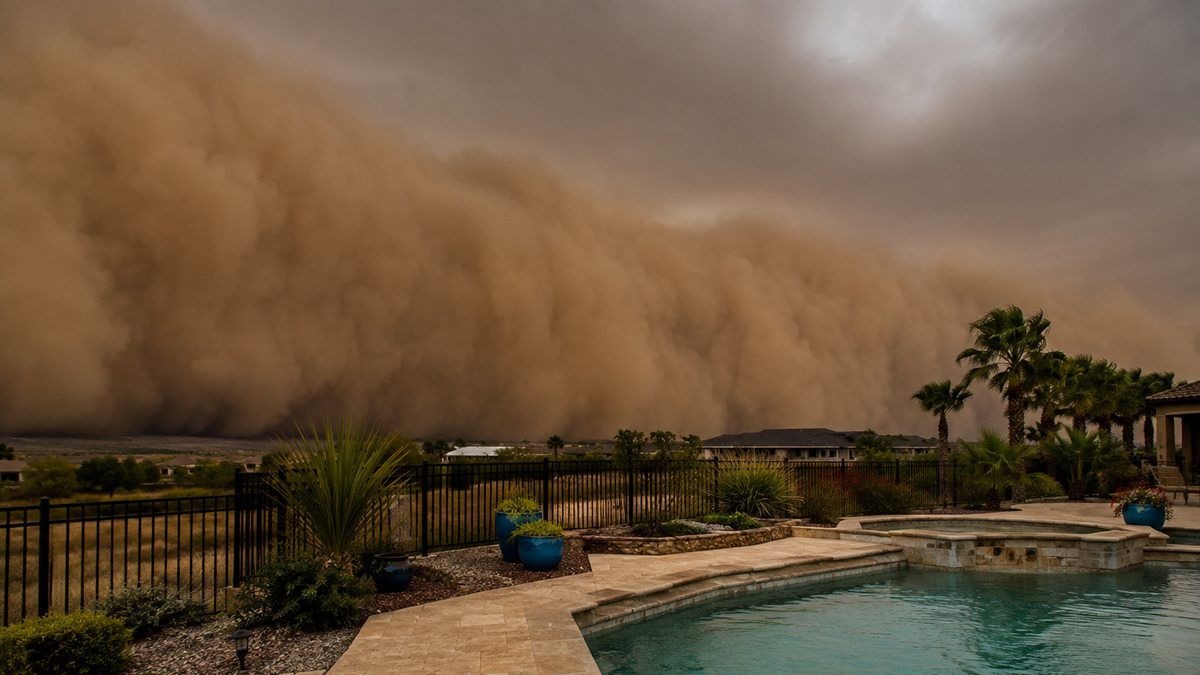
When a severe dust storm or haboob sweeps through your area, thousands of pounds of airborne dirt, silt, sand, and organic micro-particles can land directly in your swimming pool within minutes.
While dust storms don't bring the massive flooding associated with hurricanes, they present a unique nightmare for pool owners: microscopic silt that bypasses standard filters, instant chlorine depletion, and rapid algae blooms. Here is your complete guide to preparing your swimming pool for a dust storm and clearing dirty, muddy pool water fast once the storm passes.
Should You Cover Your Pool Before a Dust Storm?
When wall-of-dust warnings are issued, many pool owners wonder if covering their pool is the best defense. While a solid safety cover can block large debris, using standard solar blankets or light mesh covers before a major dust storm is often a mistake. High wind gusts preceding a haboob can catch under pool covers, tearing the material, damaging anchor points, or launching the cover and all the trapped dust straight into your yard.
- Solar Blankets & Light Covers: Remove and store them indoors. Strong winds can rip them apart or blow them away.
- Solid Winter/Safety Covers: If securely anchored, a heavy-duty cover can help, but prepare to power-wash heavy mud and silt off the top before removing it so dirt doesn't dump straight into the pool.
- Patio Items: Move lightweight furniture, floats, skimmer poles, and toys into a garage or shed. High winds can send loose patio items flying into the pool shell or glass enclosure.
Why Does a Dust Storm Turn Pool Water Green So Quickly?
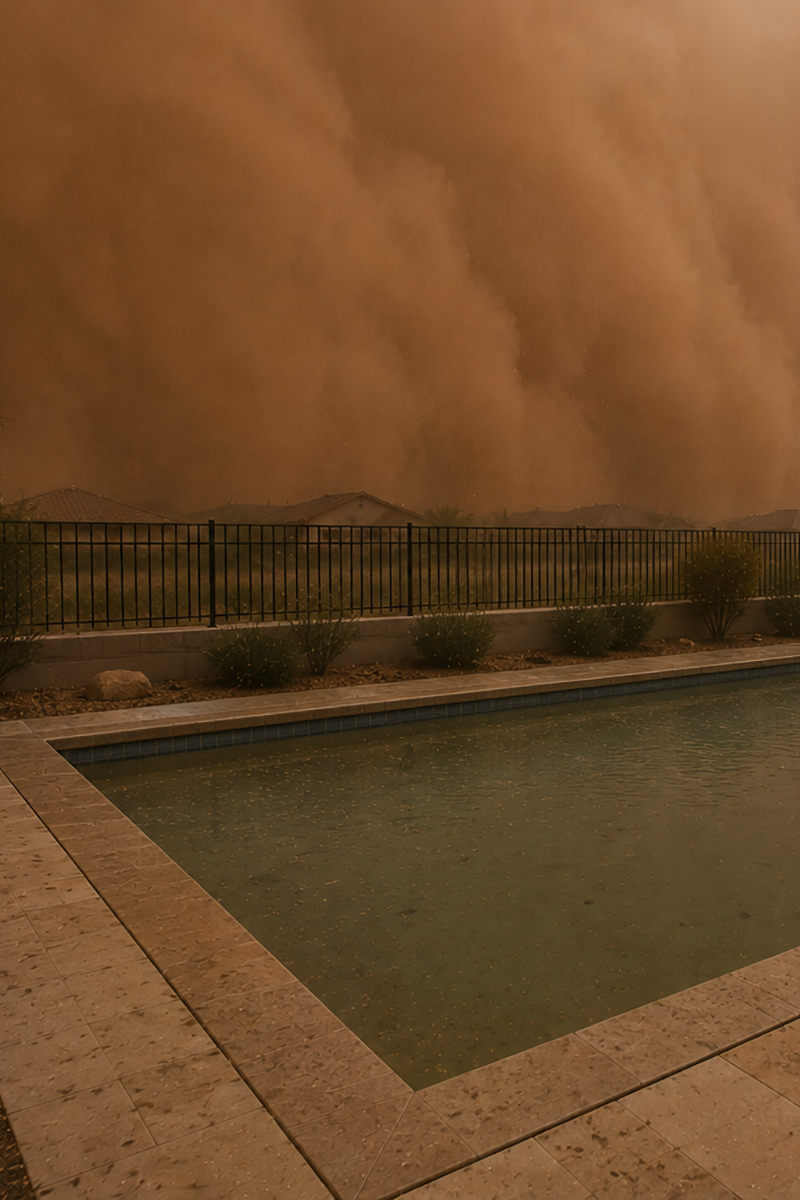
Desert dust storms are loaded with phosphates, nitrates, and organic debris. Phosphates act as a high-potency fertilizer for algae. When tons of dust hit your pool water, three things happen simultaneously:
- Chlorine Drops to Zero: The sudden organic load consumes all available free chlorine almost instantly.
- pH & Alkalinity Spike: Desert dirt and dust are highly alkaline, throwing your water balance out of alignment.
- Algae Multiplies Rapidly: Combined with high summer temperatures, high phosphates and zero chlorine create the perfect environment for a massive green or mustard algae bloom.
How Do You Chemically Protect Your Pool Before Dust Hits?
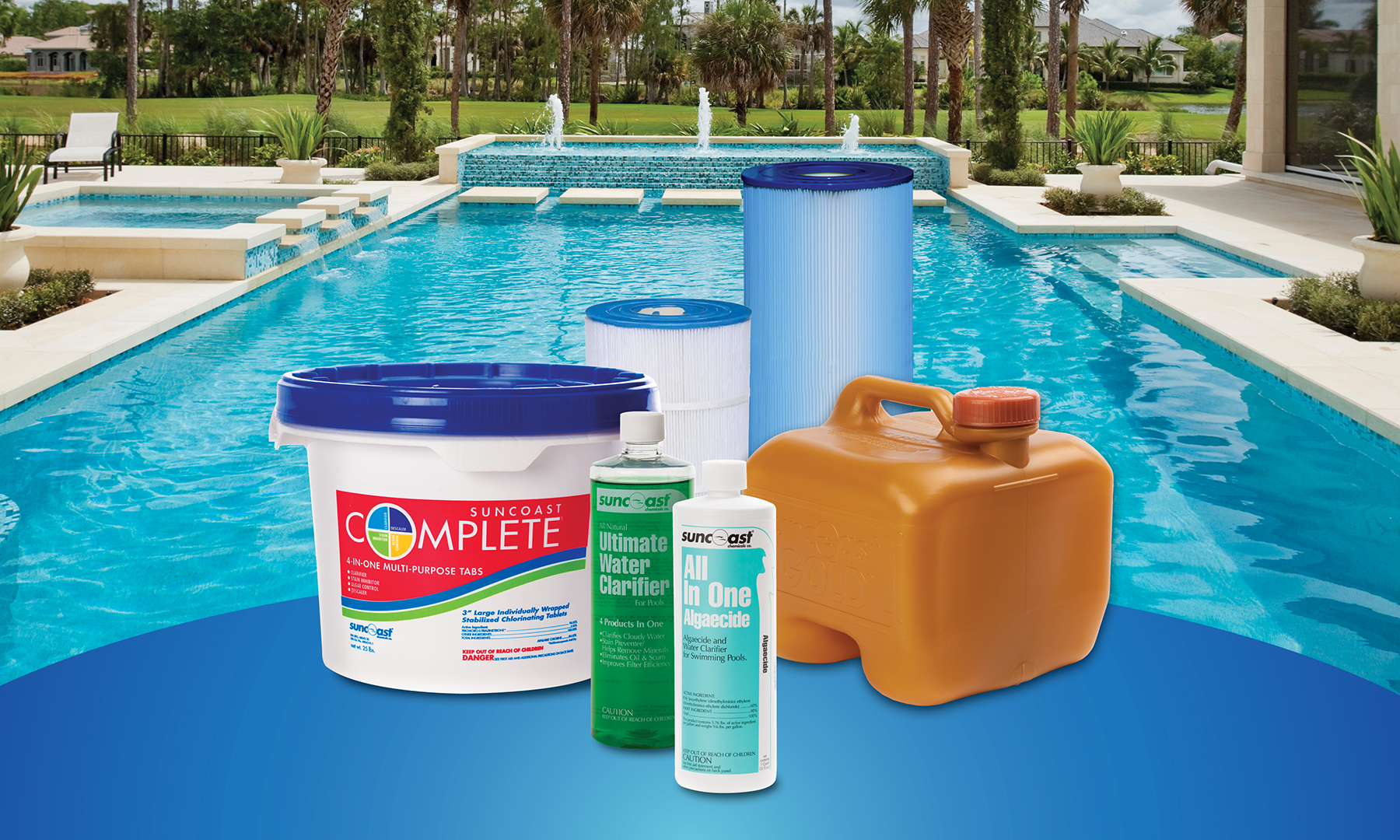
- Maintain a High Chlorine Residual: If a dust storm is forecasted, add a preventive dose of Liquid Chlorine or Suncoast Super Shock 4-Way Sanitizer & Shock Treatment to boost free chlorine levels.
- Use a Multi-Purpose Algaecide: Add a weekly dose of Suncoast All In One Algaecide throughout dust storm season to prevent algae spores from taking root when chlorine levels inevitably drop.
- Treat for Phosphates: Use a phosphate remover regularly during dust season to strip away the primary food source algae needs to survive.
Should You Leave Your Pool Pump Running During a Dust Storm?
No. Shut off your pool pump at the main circuit breaker as the dust storm approaches.
Running your filtration system during the peak of a haboob will pull massive amounts of heavy dirt and silt directly into your skimmer and main drain. This can quickly clog your skimmer baskets, starve your pump motor of water, and severely jam your filter media with thick mud.
- Shut down power at the breaker panel right before the dust wall arrives.
- Keep the system off until the severe
Post-Dust Storm Recovery Checklist: 4 Steps to Clear Muddy Pool Water Fast
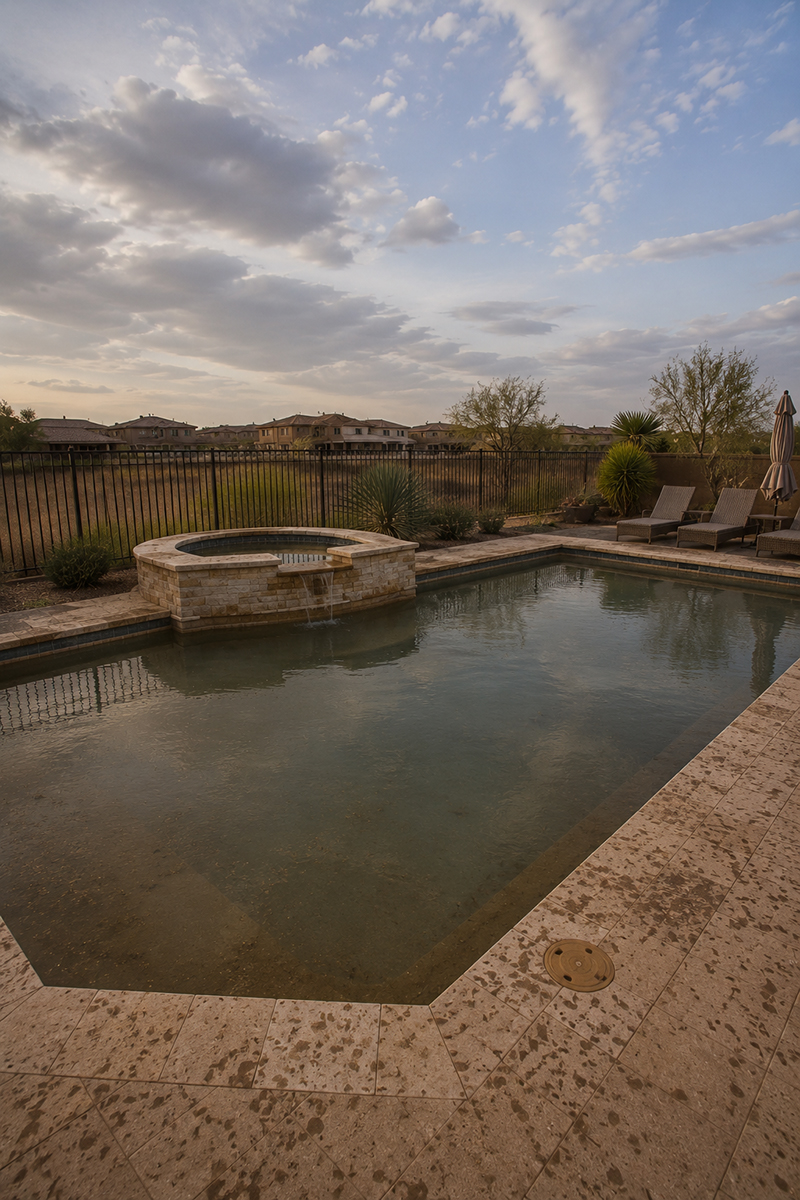
Once the winds calm and the dust settles, immediate action is critical to restore water clarity before algae takes over.
- Skim Heavy Debris and Empty Baskets: 10 Minutes. Do not turn the pump on immediately. Use a deep leaf rake to scoop out heavy dirt, leaves, and floating debris from the surface and floor. Hand-empty all skimmer and pump strainer baskets to ensure clear water flow.
- Clean, Backwash, or Rinse Your Filter: 15-20 Minutes. Thick silt will blind your filter media almost instantly. If you have a sand or DE filter, set the multiport valve to "Backwash" until the sight glass runs clear (recharge DE filters with fresh powder after). If you have a cartridge filter, remove the elements and thoroughly hose off the caked mud between the pleats.
- Add Water Clarifier or Flocculant for Fine Silt: 5 Minutes. Microscopic dust particles are often too small for standard filters to trap. Add Suncoast Ultimate Water Clarifier to bind tiny particles into larger clusters your filter can catch. For extreme mud deposits, use a pool flocculant to drop all silt to the pool floor, then vacuum directly to "Waste."
- Super-Chlorinate and Run Continuous Filtration: 24-48 Hours. Reset your circuit breaker, add a heavy recovery dose of liquid shock, and run your pump continuously for 24 to 48 hours. Monitor filter pressure closely—you may need to clean or backwash the filter multiple times as it pulls fine silt out of suspension.
Where to Get Your Pool Water Tested After a Dust Storm
Because airborne soil dramatically alters pH, total alkalinity, and sanitizer levels, standard home test strips may give inaccurate readings after a heavy haboob.
Once your pool has circulated for at least 3 to 4 hours post-cleanup, scoop a water sample from elbow-depth away from the return jets and bring it to your local Pinch A Penny store for a Free Water Test to get exact, step-by-step chemical re-balancing recommendations.
Share This Post